OUTRAGE!
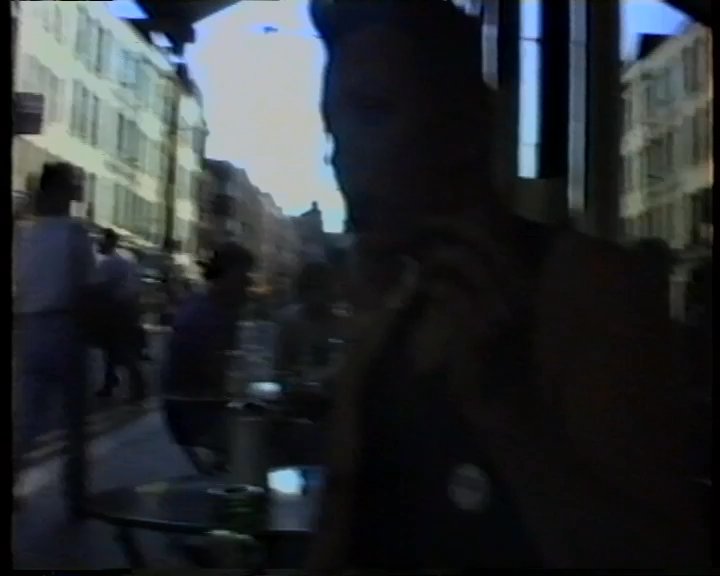
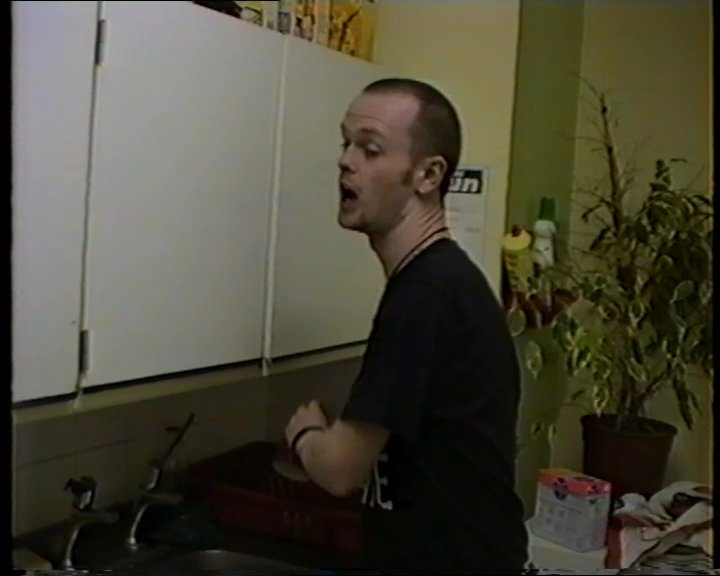
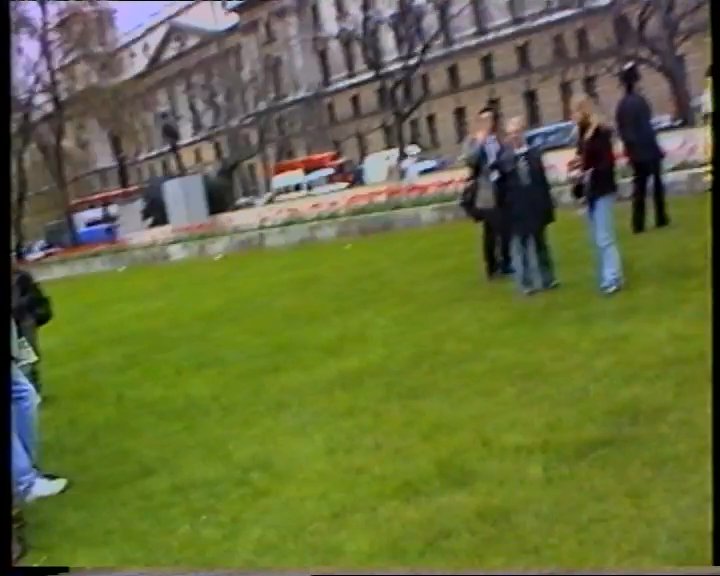
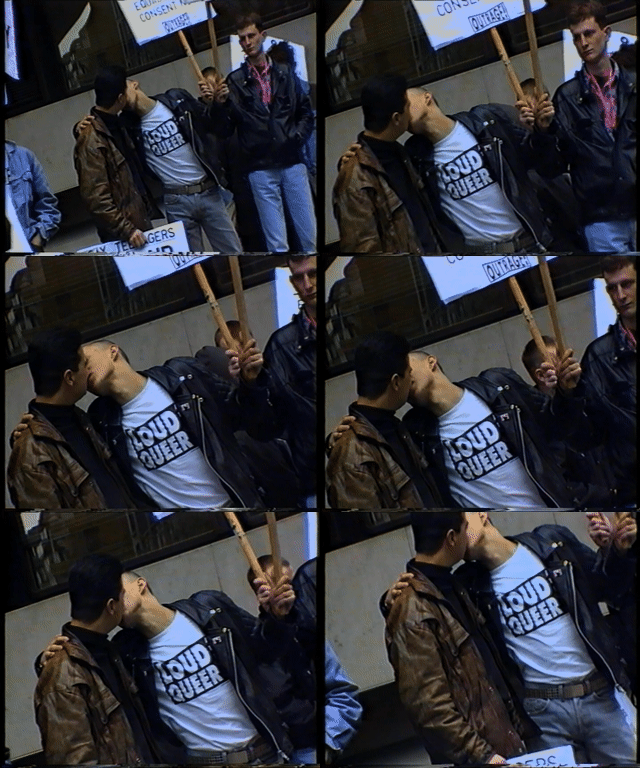
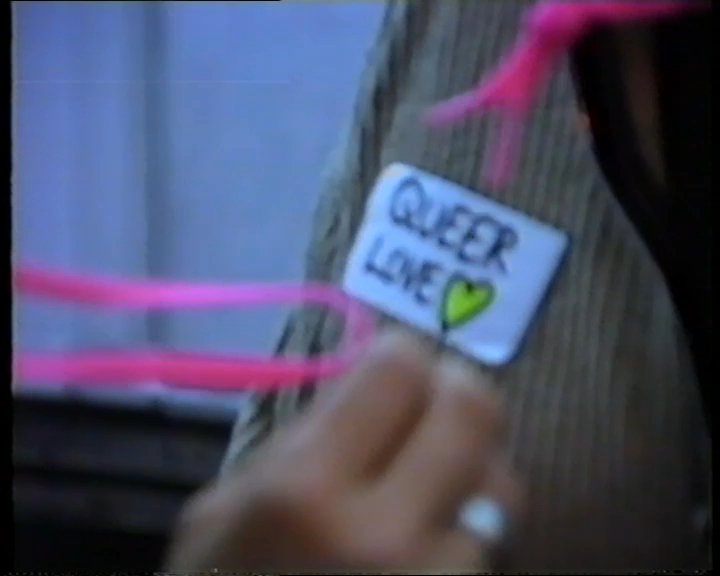
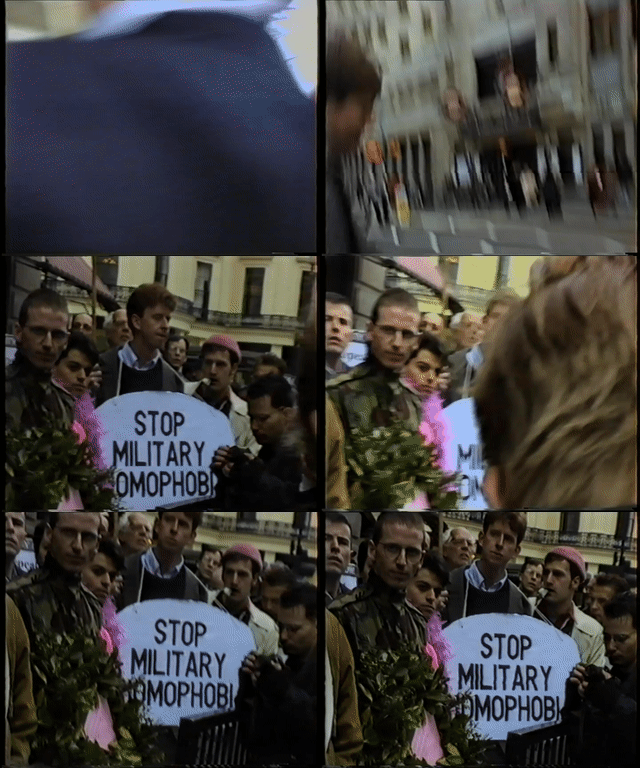
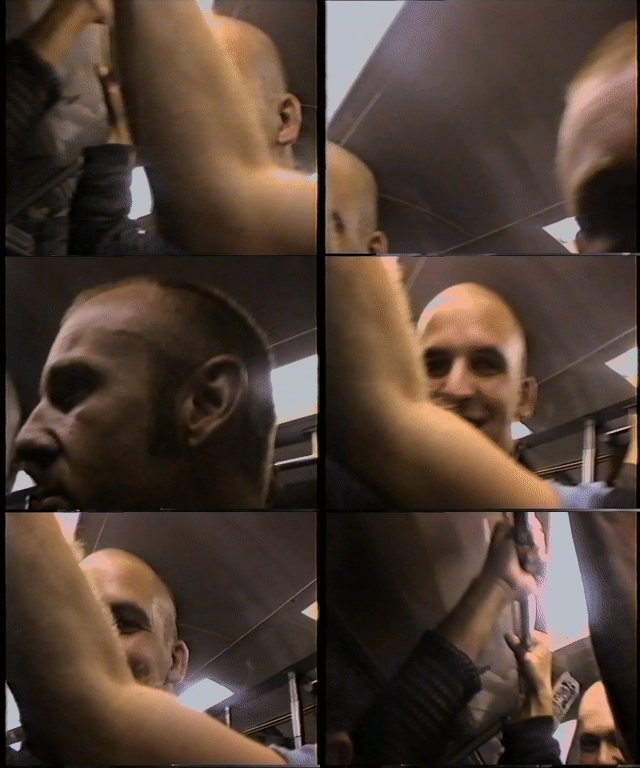
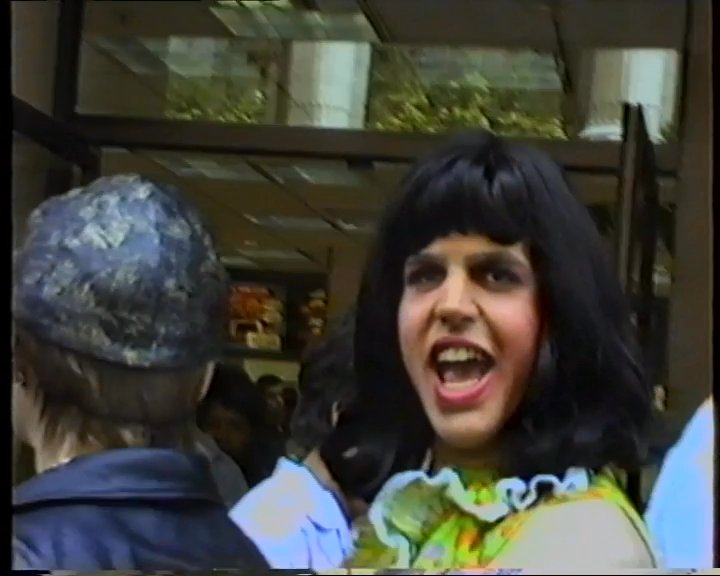
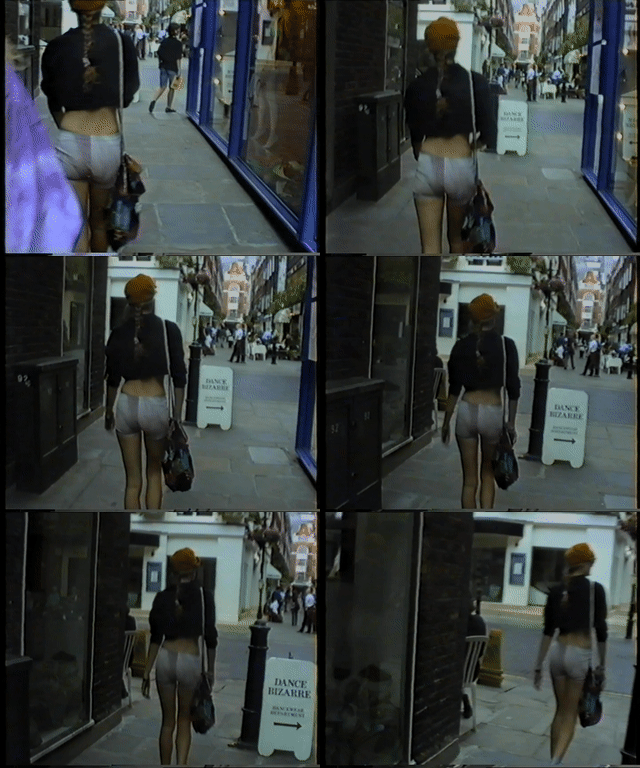
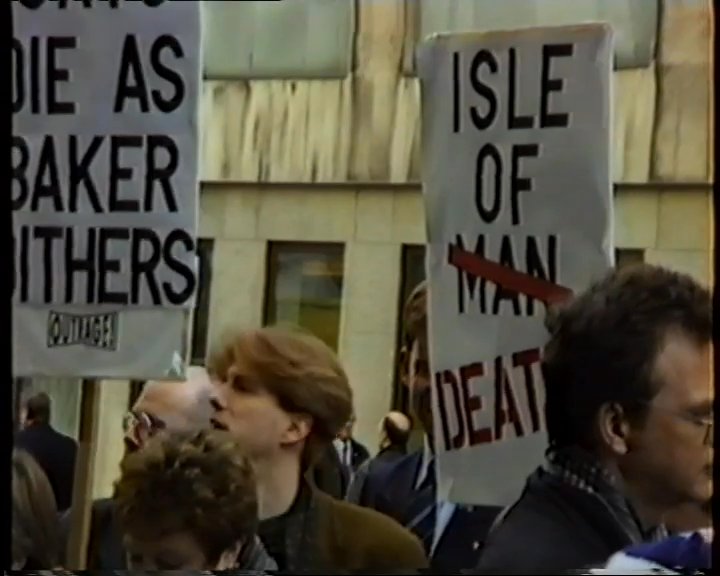
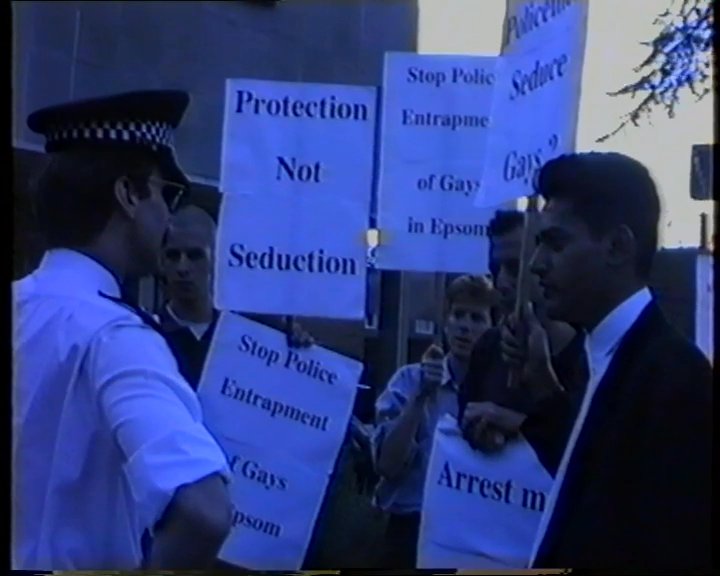
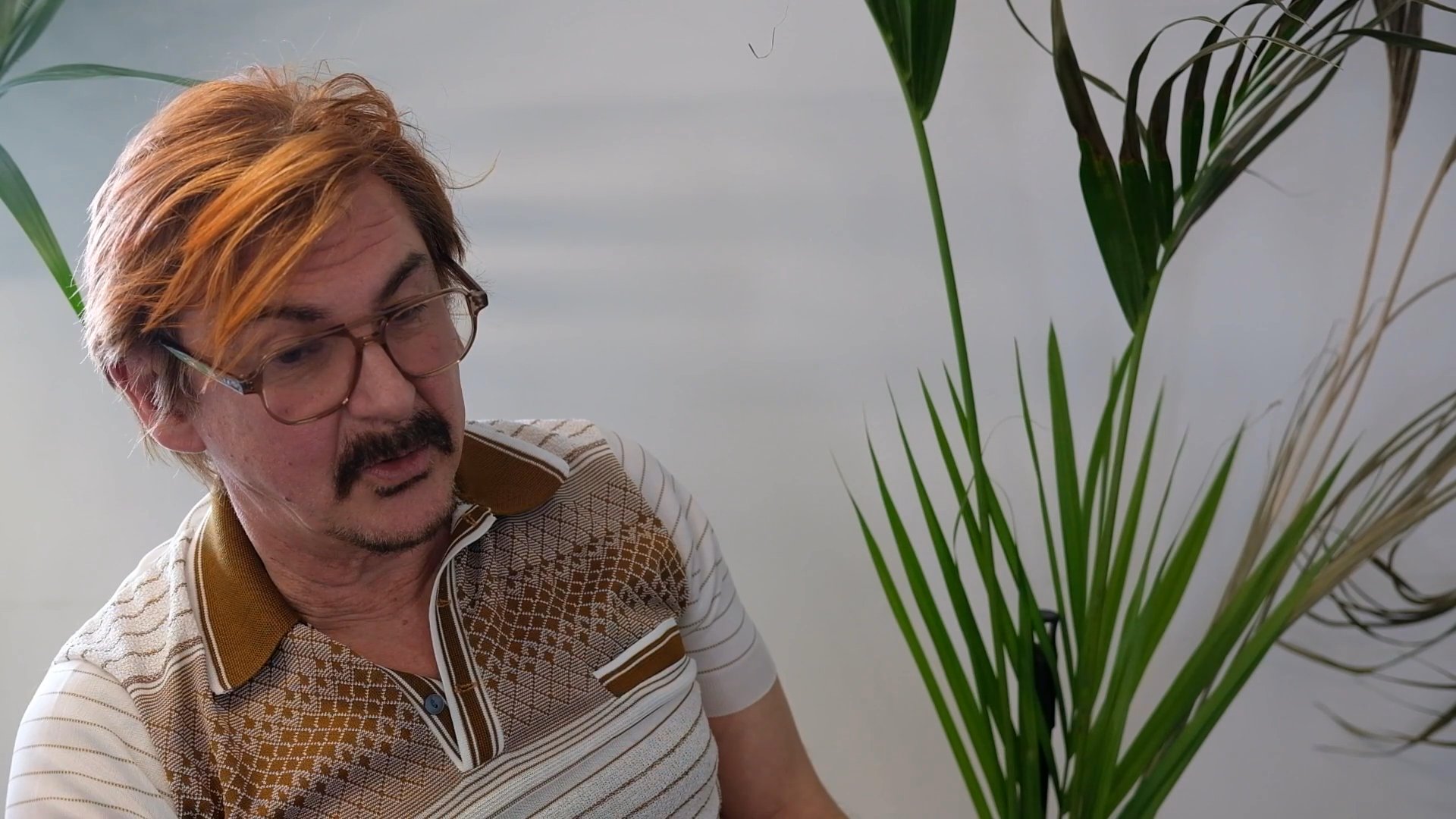
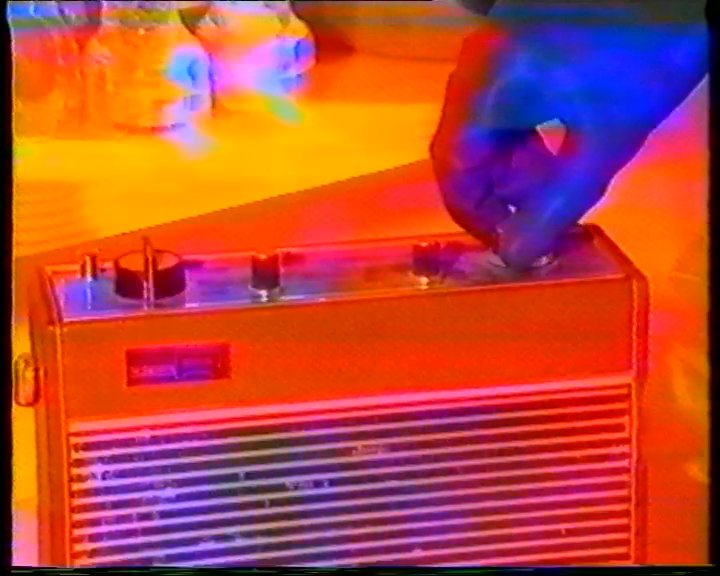
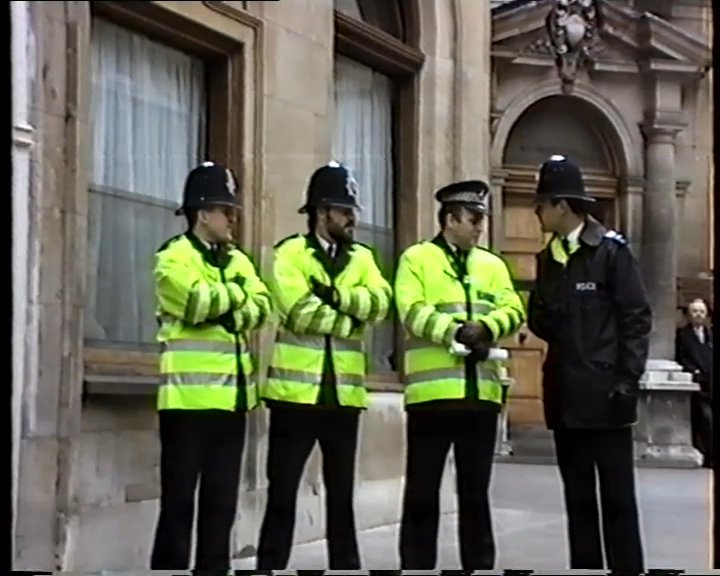
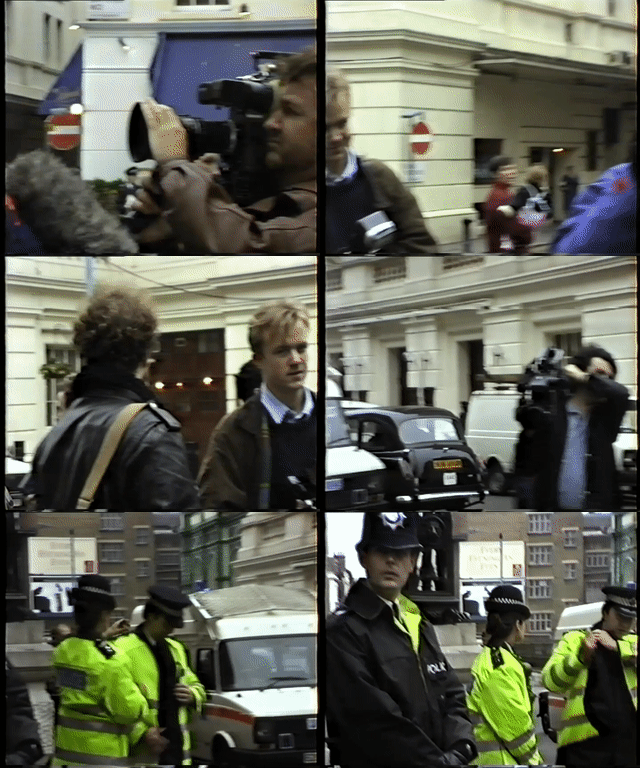
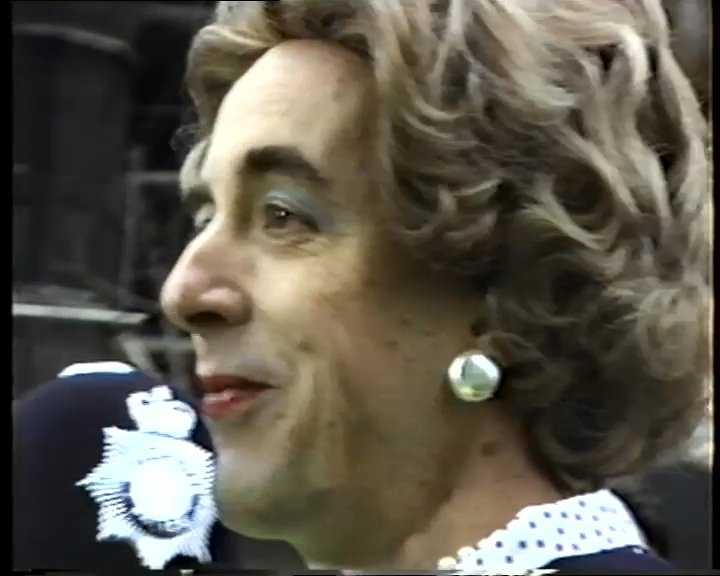
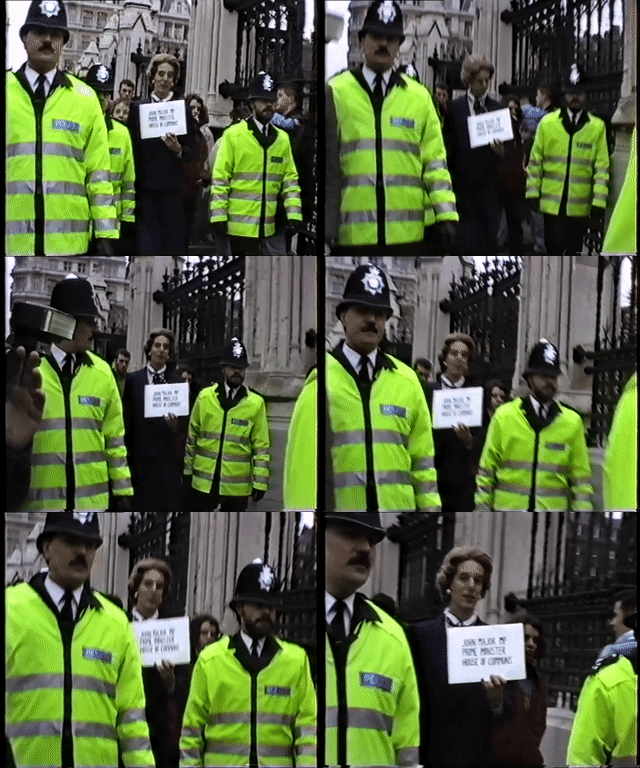
The film-maker and OUTRAGE! member Mark Harriott began using the newly available portable video technology to document the actions of OUTRAGE!, a British LGBT rights group formed in 1990 that described itself as “a broad-based group of queers committed to radical, non-violent direct action and civil disobedience” (fig. 8).25 In a recent conversation with him, Harriott explained how the work and struggles of OUTRAGE! were largely ignored or misrepresented by the mainstream media. At their early meetings OUTRAGE! members, who knew he had access to a video camera, encouraged him to document their demonstrations, which were taking place almost every week. Harriott recalls one caucus called WIG (“Work It Girl”), which focused on queer visibility in London. The resulting footage is made up of members of OUTRAGE! in drag strutting around London and going into clothing shops asking shopworkers what they thought of drag queens and gender-nonconforming fashion.26
Footage of the actions captured by Harriott is similar to that of the similar direct-action group ACT UP. Both groups used theatrics to create media spectacles and eye-catching slogans on placards, as well as costumes and large props to make visual statements. Where they differ is that much of the action Harriott recorded is not directly related to AIDS activism but instead focuses on the broader homophobic mistreatment of the lesbian and gay community. This included activities demanding equalisation of the age of consent, the Stop Murder Music campaign against homophobic language in popular dance-hall songs at the time, and protests at the Metropolitan Police’s entrapment of gay men cruising. Mirroring the die-ins seen around the same time, one clip shows protestors lying across a street to stop traffic, arms linked and banners draped over their bodies while others have placards hung around their necks with string. The camera pans across the scene and the frame becomes filled with a police van pulling up. Harriott keeps the camera rolling as he runs with it, moving between different parts of the action. There is a break in the footage, and the next shot shows protestors, arms held behind their backs, being dragged off and loaded into the back of the police van.
The hand-held camcorder footage of OUTRAGE! remains a rare document of the wider social and political context of the fight for lesbian and gay rights during the early years of the HIV/AIDS epidemic. Harriott used the video camera to make alternative images of out, proud, and loud lesbians and gay men: The use of camcorders to bear witness was both new and urgent. Juhasz describes this kind of video production as “fighting through video”.27 Hallas reinforces the mimetic properties of these direct-action videos, showing how the bodies of those in front of and behind the camera become implicated in such a way as to remind the viewer of both their strength and their vulnerability:
Positioned in the centre of the circle of activists, the camera spins around to catch each new voice that enters the deliberation. The momentum to act is viscerally felt through the embodied immediacy of the camera at that moment … such activism reminds us of the profoundly somatic dimension to bearing witness in which bodily presence has the capacity to produce the kind of extra discursive excess that constitutes the affective and ethical dimensions of magnitude.28
25 “About OutRage!”, OutRage!, https://outrage.org.uk/about/.
26 Author’s conversation with Mark Harriott, London, December 2019.
27 Juhasz, AIDS TV, 241.
28 Hallas, Reframing Bodies, 91–92.